

Veneers in Burwood
A chipped tooth. A small gap. A couple of teeth that look shorter or more uneven than the rest. Sometimes it’s one small detail that makes you start thinking about changing your smile.
Veneers are one option your dentist may discuss with you. At Burwood Dental Centre, the first step is to look at the health of your teeth and gums, talk about what you’d like to change and work out whether veneers actually make sense for you.
Porcelain or Composite?
Both types can change the appearance of selected teeth, but they’re made differently and come with different considerations.
The trade-off is that composite generally stains and wears more easily than porcelain, so it may need polishing, repair or replacement sooner.
When Might Veneers Be Considered?
People ask about veneers for all sorts of reasons. Some of the more common ones include:
- Chipped or worn tooth edges
- Staining or discolouration
- Small gaps
- Short or unevenly shaped teeth
- Minor differences in alignment
- Teeth that look uneven in size or proportion
Before going ahead, your dentist will check that your teeth and gums are healthy and that there is enough enamel to support the veneers.
Your bite matters too. If you grind or clench your teeth, that can place extra pressure on veneers and increase the chance of them chipping, cracking or coming loose.

What Happens During Treatment?
The first step is a consultation.
Your dentist will examine your teeth and gums, check your bite and ask what you’d like to change. If there are existing dental problems, those may need to be dealt with before cosmetic treatment begins.
If veneers look like a suitable option, you’ll talk about how many teeth may be involved, which material to use and the sort of colour, shape and proportion you’re aiming for.
For porcelain veneers, your dentist may take impressions, moulds or digital scans. The iTero Element oral scanner may also be used where appropriate. These records are then used by the dental laboratory to create your veneers.
Before porcelain veneers are bonded into place, your dentist will check the fit, shape and colour and make any needed adjustments.
Composite veneers are generally built up and shaped directly on the teeth.
Once treatment is complete, we’ll explain how to care for your veneers. A follow-up visit may also be recommended so your bite can be checked.
How Much Do Veneers Cost?
There isn’t a single price because every case is different.
The cost can depend on:
- Whether you choose porcelain or composite
- How many teeth are being treated
- How much preparation is needed
- The complexity of the changes
- Whether other dental care is required first
- Laboratory and material costs
After your consultation, you’ll be given a personalised treatment plan with the costs explained before you decide whether to go ahead.
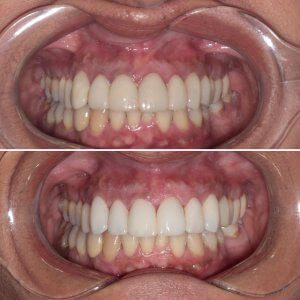
Looking After Your Veneers
Your treated teeth still need the same day-to-day care as your natural teeth.
That means brushing twice a day, cleaning between your teeth and keeping up with regular dental check-ups and professional cleans.
It’s also a good idea to avoid biting hard objects such as ice, pens or fingernails, and not to use your teeth to tear open packaging.
If you grind or clench, your dentist may recommend a protective appliance.
Porcelain itself is resistant to staining, but the natural teeth around it can still change colour over time. Composite veneers can pick up surface staining and may need professional polishing.
How long veneers last varies from person to person. Porcelain often lasts longer than composite, but neither should be considered permanent.
Frequently Asked Questions
Will my teeth need to be shaved down?
Find Out If Veneers Are Right for You
If there are a few things about your smile you’d like to change, a consultation is a chance to find out what your options actually are.
Contact Burwood Dental Centre to book a consultation and talk through whether porcelain veneers, composite veneers or another approach may be suitable for you.
Any invasive or surgical procedure may carry risks. Before moving forward, it is recommended that you seek a second opinion from an appropriately licensed medical professional.
